All of us are hell-bent on the fact that C is a procedure - oriented language . But , that happens to be a misconception , to be solved . ANSI-C is said to be a fully fledged Object Oriented Language.
For a complete reference guide for Object Oriented Programming in C :
http://www.planetpdf.com/codecuts/pdfs/ooc.pdf
Hope this removes a big misconception.
Monday, January 18, 2010

Saturday, January 16, 2010
Anaconda Linux Installer Brrrrrrr it's scary indeed ........
What is Anaconda ?
Anaconda is the installer for many Linux packages .
Examples of Operating systems which use Anaconda :
1) Red Hat
2)Fedora
3)CentOS
4) Sabayon
and many more in the Red Hat bandwagon .
It is developed using C and python,with the graphical front end developed using PyGtk and text front end using newt .
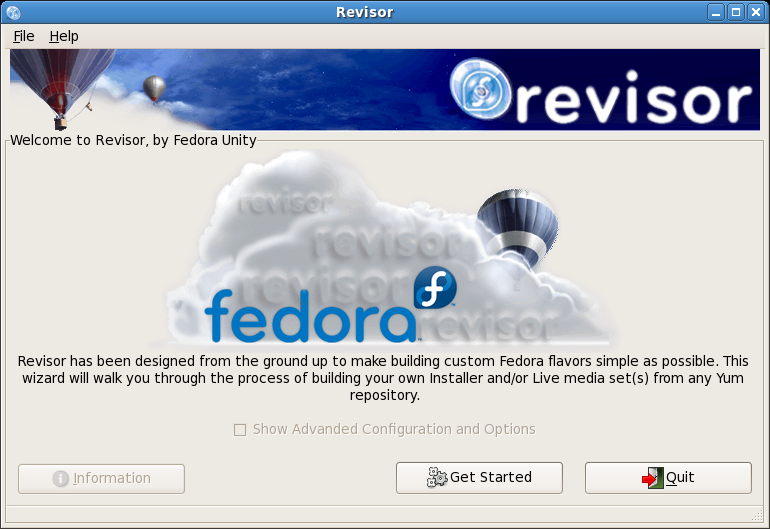
Sample Installer picture :

Anaconda is the installer for many Linux packages .
Examples of Operating systems which use Anaconda :
1) Red Hat
2)Fedora
3)CentOS
4) Sabayon
and many more in the Red Hat bandwagon .
It is developed using C and python,with the graphical front end developed using PyGtk and text front end using newt .
Sample Installer picture :
Useful Links :
1) http://fedoraproject.org/wiki/Anaconda ,for the fedora implementation .
2) http://74.125.153.132/search?q=cache:http://www.pygtk.org/ for more information on PyGTK.
Hope this helped you. You are welcome to comment.
Friday, January 15, 2010
dmesg Command in Linux
This article serves as an introduction , to one of the rarely known UNIX commands to general under-graduate students , the "dmesg" command .
Definition :
dmesg - print or control the kernel ring buffer .
What do we mean by the term Kernel Ring Buffer ?
In simplest terms it is a log which contains messages from the kernel .
For example we can try a simple command :
[root@localhost]#dmesg | grep Memory
[ 0.000000] Memory: 371348k/393152k available (4565k kernel code, 21120k reserved, 2143k data, 540k init, 0k highmem)
This command gives certain information about the memory reserved by the kernel at boot time .
Uses of dmesg command:
1) Useful to extract information , about the functioning of various kernel modules basically the device drivers.
Therefore , this message was logged in by the kernel at the time of file system mounting and can be extracted using the dmesg utility .
Useful Links :
1 ) http://ftp-uxsup.csx.cam.ac.uk/pub/doc/suse/suse9.2/suselinux-adminguide_en/ch29s09.html
Offers a simple and an effective example .
2) For more advanced usage of dmesg command refer :
http://www.linfo.org/dmesg.html
The link mentioned , also provides the answer to the general query of what is a Ring Buffer.
For those interested to see the file from which we can see the input file to the dmesg command ,
open the file /var/log/dmesg with any standard text editor.
Hope this solves some of your queries.
Definition :
dmesg - print or control the kernel ring buffer .
What do we mean by the term Kernel Ring Buffer ?
In simplest terms it is a log which contains messages from the kernel .
For example we can try a simple command :
[root@localhost]#dmesg | grep Memory
[ 0.000000] Memory: 371348k/393152k available (4565k kernel code, 21120k reserved, 2143k data, 540k init, 0k highmem)
This command gives certain information about the memory reserved by the kernel at boot time .
Uses of dmesg command:
1) Useful to extract information , about the functioning of various kernel modules basically the device drivers.
Therefore , this message was logged in by the kernel at the time of file system mounting and can be extracted using the dmesg utility .
Useful Links :
1 ) http://ftp-uxsup.csx.cam.ac.uk/pub/doc/suse/suse9.2/suselinux-adminguide_en/ch29s09.html
Offers a simple and an effective example .
2) For more advanced usage of dmesg command refer :
http://www.linfo.org/dmesg.html
The link mentioned , also provides the answer to the general query of what is a Ring Buffer.
For those interested to see the file from which we can see the input file to the dmesg command ,
open the file /var/log/dmesg with any standard text editor.
Hope this solves some of your queries.
Subscribe to:
Posts (Atom)
